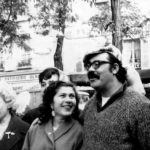

110th Anniversary of Khatuta Berbekov’s Birth: A Personal Portrait of KBSU’s First Rector in His Niece’s Memories
February 26 marks the 110th anniversary of the birth of Khatuta Mutovich Berbekov, the founder and first rector of Kabardino-Balkarian State University. He is known and remembered in the republic as a prominent political and public figure, a doctor of historical sciences, a professor, and a man who laid the foundations of higher education in the region. The KBSU press service spoke with his niece, Madina Berbekova, about Khatuta Mutovich’s private life and the side of his personality that few know.
— What is your first memory of Khatuta Mutovich?
— We lived nearby, and almost every morning on the way to kindergarten, I would see him doing exercises on the balcony. I remember how we greeted each other at the start of the day. When he had free time, he’d pick me up from kindergarten, and we’d walk in the park. Those are probably my earliest memories of my uncle.
— Khatuta Mutovich came from a large working-class family. Did his thirst for knowledge manifest itself in him from childhood?
— Khatuta Mutovich’s parents were very wise people. They always guided their children, telling them that education is a step into the future. His grandparents raised nine children, half of whom received higher education. After graduating from Aushiger School, Khatuta Mutovich continued his studies in Novocherkassk, and then in Leningrad, at the Krupskaya Pedagogical Institute.
— Khatuta Mutovich had a successful socio-political career. Why did a young man with such promising prospects redirect his energies to education and science?
— Before becoming rector, he was the regional committee secretary for ideology. Until 1957, Nalchik only had a pedagogical institute that trained teachers. As the republic’s economy developed, a need arose for other personnel: specialists in agriculture, industry, and medicine. At that time, young people who left for other cities and enrolled in universities did not always return to the republic. Khatuta Mutovich set a goal: to train specialists in Nalchik so that they would stay and work in the region. This goal—to raise the republic’s educational and cultural level—influenced his decision.
— So, the end itself dictated the means? Did he understand that he had to somehow direct the educational process?
— Of course, he really wanted young people to receive an education in their native republic. He attracted leading scientists of national significance to the university, professors who, thanks to whom, entire scientific schools emerged in Kabardino-Balkaria. Khatuta Mutovich’s life’s work probably boiled down to being a pioneer. He never cheated and was very proud that the republic had a university.
— What kind of rector was Khatuta Mutovich? What was his daily work routine like?
— He was a very busy man, but easy to talk to. My uncle never showed off his high position. In the first years, the university was undergoing major changes: buildings were being built, classrooms and offices were being renovated, and laboratories were being equipped. So Berbekov unloaded trucks and carried equipment into the building along with the workers, students, and faculty.
— What was his workspace like, Madina Temirkanovna?
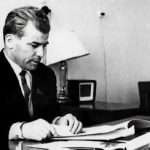
— I haven’t been in his office at the university, but at home, his room had floor-to-ceiling shelves filled with books. His desk was always piled high with manuscripts, and he worked hard in the evenings, too.
— How did Khatuta Mutovich spend his free time? What did he do outside of work?
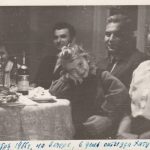
«On holidays, he would gather all his family and friends. These were very joyful and warm gatherings.»
«Did university life somehow permeate your family circle?»
«He completely separated his personal and professional spheres. He could easily attend any student meeting or event, and students would easily approach him and voice their problems. He was an open and kind person.»
«What was it like studying at a university headed by your uncle? Did that come with additional responsibilities?»
«I graduated from the Chemistry and Biology Department of Kabardino-Balkarian State University. People who worked with him were still alive during my student years. The dean and many of the faculty members were close associates of my uncle. This, of course, imposed a very heavy burden of responsibility—I could not let down a loved one. I teach this to my only son, Khatuta Mutovich’s great-nephew. We must uphold the standards my uncle set.»
— When did you realize what Hatuta Mutović had done for the republic?
— He was always an authority figure for me. He was my favorite uncle: he paid more attention to me, allowed me to do many things he wouldn’t have allowed others to do. It was my uncle who gave me my name at birth, but he never called me Madina—only Lapočka. Before his trip to Europe, Hatuta Mutović gathered his brothers and sisters at home for the last time. In the midst of the feast, he took out his camera and took a picture of me in my father’s arms—it’s my favorite photo.
— After his trip to Europe, Khatuta Mutovich kept photos and notes about the trip. What does he look like during this period, judging by the documents?
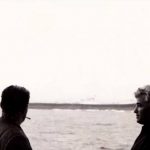
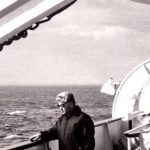
— He managed to visit France, Italy, Greece, Turkey, and England. My uncle took a camera with him on the cruise and returned with a whole album. I still have two of his travel notebooks, in which he recorded every detail. He wrote about life in Western countries, especially culture and, of course, education. In addition to the notebooks, I also have a postcard. At the end is the inscription: «Greetings to my Sweetheart.»
— On Khatuta Mutovich Berbekov’s birthday, I want to know: how would you spend this day with him, if you had the chance?
— It would be a celebration with loved ones, a warm, intimate evening. Everything he loved.